An 80-Proof of Concept
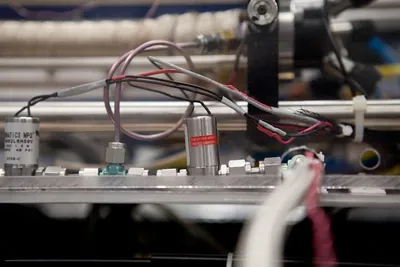
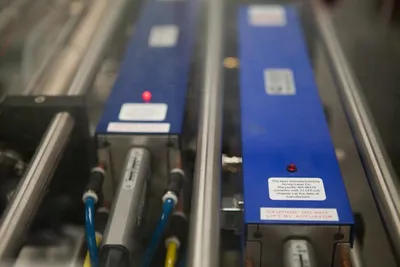
In late 2008, after more than three years of development work, Picomole’s LifeSens proof-of-concept prototype was finally mounted on a wheeled cart. At the outset, that had seemed preposterous. Yet the scientists and engineers who joined Picomole in those early years had succeeded in miniaturizing the laboratory apparatus I’d built that once occupied a 4×8 foot optical table surrounded by equipment racks. It was now possible to wheel it around a setting like a hospital.
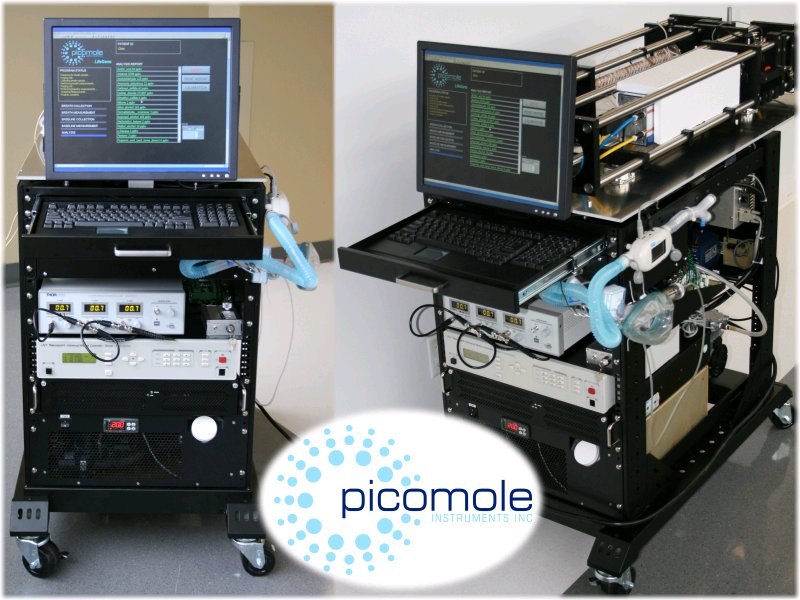 The LifeSens proof-of-concept prototype, ca. 2008.
But LifeSens was still essentially a theoretical concept when it came to clinical diagnostics. Nearly all of our early testing in the lab had been done with single gases in high-purity nitrogen, not complex air mixtures. We’d given a few of our own breath samples in the lab, but breath metabolites we observed, like methanol and isoprene, fell within normal ranges for healthy individuals according to the scientific literature.
We needed a sanity check. Something that would drive the levels of a breath metabolite in a similar way that a disease might. My computer model of LifeSens suggested it would have high sensitivity to ethanol, which was convenient and non-toxic (when consumed in reasonable amounts). Some important experimental variables could only be estimated beforehand, like how well our sorbent tube sample collection process would capture ethanol from a real breath sample. We didn’t know for sure if it would work the first time, but we were about to find out.
We considered various options for alcoholic beverage to consume, and settled on vodka. Our reasoning was that it was a simpler solution than any brown booze, and should have fewer impurities that might complicate the analysis. Since we didn’t know how effective LifeSens would be at detecting ethanol, we needed to give it a strong signal. I did a back of the envelope calculation and decided to take a dose of 4 ounces of vodka. Finally, in order to set the initial time t0 of the study, the subject would have to drink it all quickly (no nursing it).
This was not a task to delegate to one of my employees, so I became Picomole’s first test subject. As soon as the team had everything ready, I gulped down the vodka and the experiment began. I rinsed my mouth out with water to eliminate any traces of ethanol that remained in my mouth (we thought mouth alcohol might contaminate the alveolar air samples as the subject exhaled, and erroneously inflate the measured value). And then I began to give breath samples.
We only had a small supply of sorbent tubes, which limited the number of samples we could collect, and each desorption-scan process took about an hour to complete in those days. That meant that every link in the experimental chain had to work like clockwork for the duration. The team had their hands full keeping everything running. Soon, the vodka hit my bloodstream and I was sidelined from doing much of anything useful. I gave breath samples every 30 minutes over the next four hours and tried to stay out of the way.
When it was over, the results exceeded everything we had hoped for, and then some. LifeSens was swamped with signal. We’d been so worried it might not work that we overshot wildly in the other direction. And then, we also started to observe a steady rise in exhaled acetaldehyde, which confirmed that the alcohol in my bloodstream was being metabolized in my liver.
That day, LifeSens stopped being a neat idea. It became a real thing.